What is your Claude subscription actually changing?
The AI bill is easy to find. The return is harder. A paid Claude seat becomes useful when employees can connect it to better work.
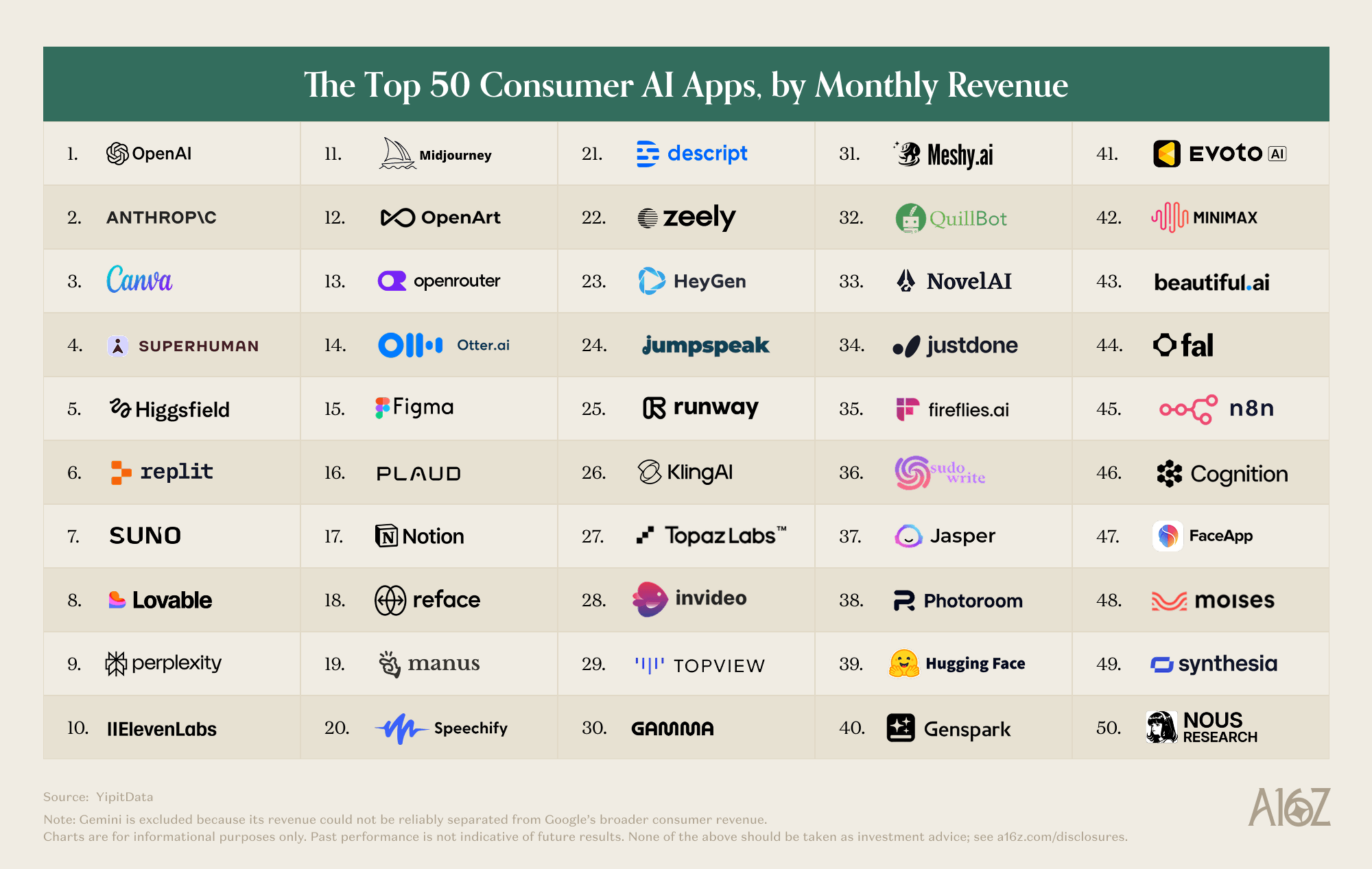
The number that caught my attention in a16z's new look at AI apps was $903 a month. That is what the top 1% of AI spenders in its US consumer card data paid on average in August. The median person paying for AI spent $25. These are personal purchases, not company budgets. Still, the gap made me think about how easily we focus on what people spend without asking what the spending changes.
The same report found that 4.5% of eligible consumers in its US e-receipt panel had a paid personal subscription to ChatGPT, Gemini, or Claude, up from 2.1% a year earlier. That tells us paid use is growing. It cannot tell us whether someone finished a project faster, made a better decision, or changed a process. I think companies need to ask those questions as they buy team access to tools like Claude.
Say a 40-person company gives its employees Claude. The bill is easy to find. The return is harder. Who has actually brought it into a recurring task? Which project moved faster, and by how much? Did the quality of the work improve, or did someone else spend more time checking and correcting it? If nobody records what the work looked like before, a company can renew every seat without knowing whether the subscription is helping.
There is another half of this problem: access arrives before anyone helps employees understand what the tool can do for their own work. A general training may show a few impressive prompts. Then people return to their usual deadlines, information, and handoffs. If they do not know which tasks to try, what data is appropriate to use, or how to review the output, the subscription stays on the bill while the workflow stays the same. That is an adoption problem, and it is also a spending problem.
At Ruby, we start with the work. We sit with employees to map a repeated task, find the manual steps and the decisions around them, and choose a place where Claude could actually help. Then we train the team on that task, with a way to check the output and a clear owner for the process. We can compare the time, quality, and rework before and after, then weigh those results against what the team is paying for seats and usage. As Claude changes, we help the team understand which updates matter for the work they are already doing. That is how you get more out of a subscription you have already bought.
I do not think the lesson in the a16z numbers is that a business should spend more or less than anyone else. It is that the app bill is only one side of the story. If a paid tool helps an employee finish a real project with less busywork, the team should be able to point to that change. If nobody can, the next step is to learn how people are working before buying another seat.
Sources & further reading
Start with the work. Build the right system around it.
We help teams understand where AI is useful, choose the right tools for the job, and build the confidence to keep improving.
Book a Call