When AI speeds up building, the rest of work has to catch up.
Anthropic’s merged code changes rose more than tenfold. As one task gets faster, the people and processes around it need to keep pace.
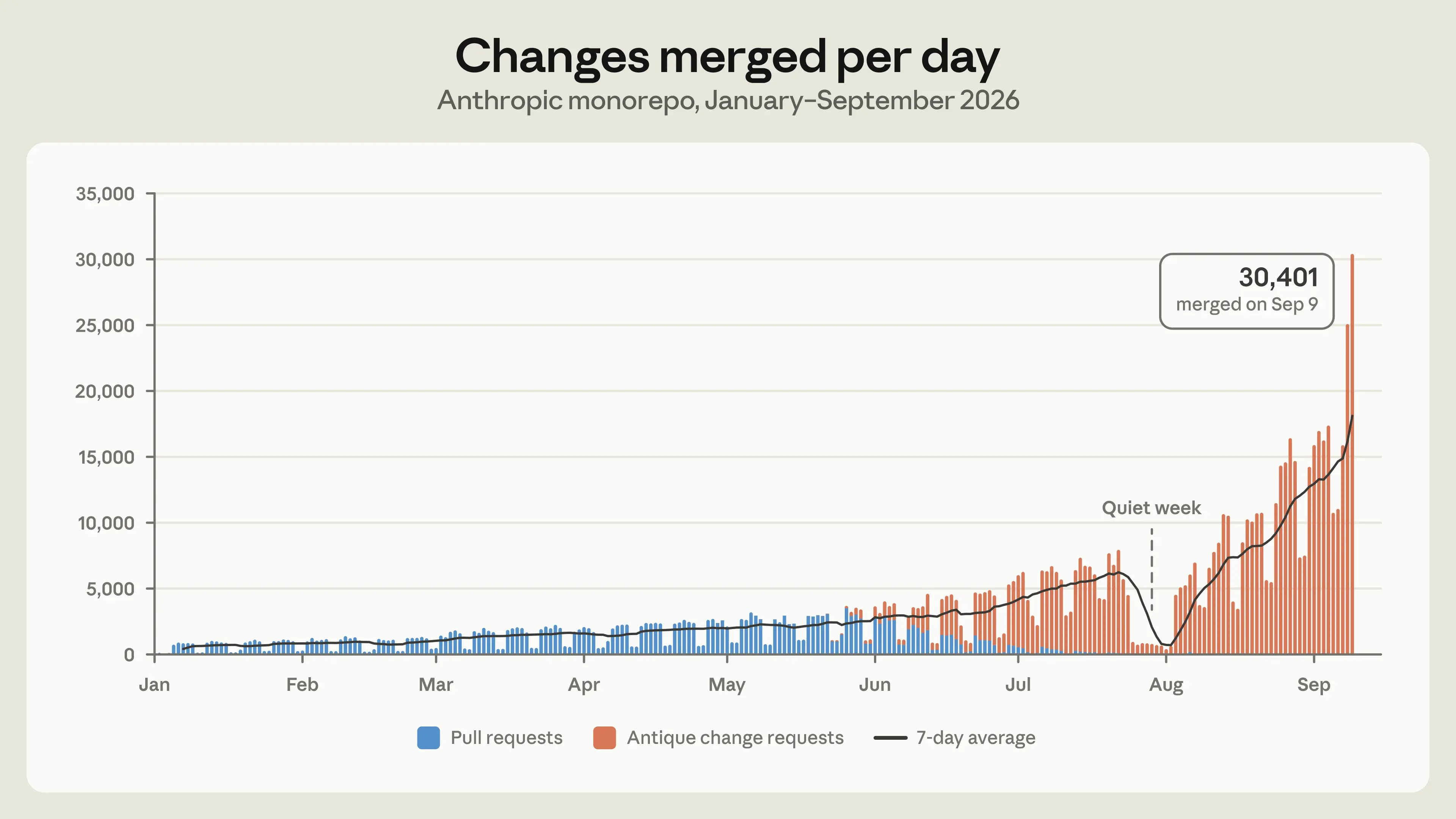
One chart from Anthropic's engineering team stopped me. In May 2026, the company averaged about 2,500 code changes merged a day. By September, it was merging more than 30,000 a day. Those are merged changes, not every commit an engineer makes, and Anthropic says its workload is unusual. Still, it is a clear example of what happens when AI makes one part of a process much faster.
The next bottleneck moves somewhere else.
For Anthropic, it moved into source control, testing, and code review. The team built new infrastructure to handle the volume, but the engineers did not disappear from the process. Anthropic says they still made the design decisions, reviewed the intent of changes, and told the AI no when it chose a path that broke an important constraint. The speed of production raised the value of knowing what should be built and how to check it.
Most companies are not going to merge 30,000 changes a day. A 50-person business may feel the same pattern on a smaller scale. An employee can now produce a first draft, analyze a spreadsheet, or assemble a proposal much faster. Then the work waits for someone to verify the numbers, find the right customer context, or decide what to do with the answer. Buying a faster tool does not automatically make the whole workflow faster.
This is also why AI training cannot be a one-time event. The platforms change. A new model may handle a task better, cost less, or make a previous workaround unnecessary. Employees need to know which changes affect the work they actually do, when to update a process, and where their own judgment still matters. Otherwise, the tools keep moving while the team keeps working from last quarter's instructions.
At Ruby, our ongoing support is meant to close that gap. We learn the recurring work first, build and train around a specific workflow, and then revisit it as the tools change. If a new capability is relevant, we test it against that workflow and help the people who own it adopt the change. If it is not relevant, the team does not need another update for its own sake.
Anthropic's number is not a target for every company. It is a reminder to watch what happens after the task gets faster. The businesses that benefit will be the ones that keep their people, review steps, and processes moving with the technology.
Sources & further reading
Start with the work. Build the right system around it.
We help teams understand where AI is useful, choose the right tools for the job, and build the confidence to keep improving.
Book a Call