Your IT provider can keep the systems running. Who helps the work change?
The next layer of managed service connects secure systems with the people learning to use AI in their daily work.
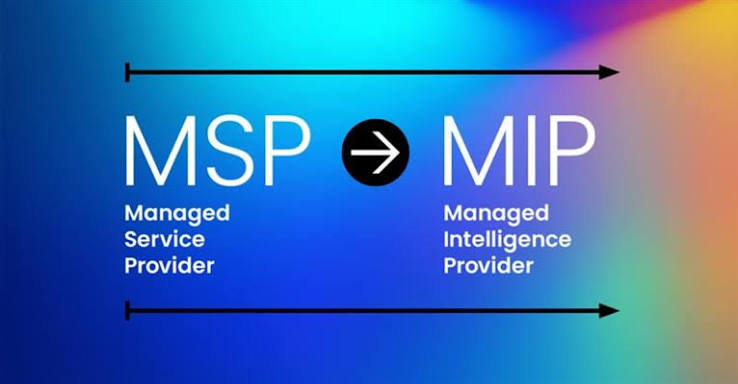
A managed service provider can make sure a company's devices, accounts, security, backups, and software keep working. That is valuable work. But when a client asks, “How should our team use AI in its actual day?” the conversation moves beyond IT maintenance.
In Kaseya's 2026 survey of more than 1,000 MSPs, 48% ranked AI and automation as the top client need for the year, while 13% said they were generating meaningful revenue from those services. It is a vendor survey, so I would not treat it as a complete picture of the market. But the gap captures a practical tension: interest is high, and many teams still need help turning it into a repeatable way of working.
Pax8 calls the next version of this service a Managed Intelligence Provider, or MIP. I think the useful part of that idea is the word managed. A team does not finish adopting AI when someone purchases a license or holds a training session. Someone has to understand the work, decide where AI belongs, set boundaries for the data and decisions, train the employees using it, and return when the tools change.
We have begun putting this idea into practice with Mantra Computing. Together, we ran a lunch and learn called “Beyond the Prompt.” In the follow-up packet, we used meeting preparation to show what comes after a clever prompt. Start with the calendar invite and the previous meeting's notes or transcript. Add the relationship context. Decide what a useful result should include, such as what was decided, what remains open, and who owns the next action. Then turn that one meeting's instructions into a workflow the team can reuse.
The packet also puts three practices around that workflow: use the business AI account the company has approved, apply judgment about where AI belongs, and keep a person responsible for reviewing the result. When we introduced calendar and email connectors as a way to bring live information into meeting prep, we asked the team to consider what data the connection could reach and whether it could read, draft, or send. Those are not details to sort out after the tool is built. They are part of deciding whether the workflow is ready to use.
That work fits alongside the MSP relationship. The MSP knows the client's systems, access controls, and support needs. Ruby can work with that foundation, learning from the people who handle the client's recurring tasks and identifying a process worth improving. We translate between the business problem and the capabilities of tools the team may already have, such as Claude, ChatGPT, or Copilot. Then we help employees use the new workflow, review its results, and adapt it over time.
That is where the MSP relationship matters. A meeting-prep assistant needs secure accounts and sensible connector permissions. It also needs someone to sit with employees, understand what a useful preparation looks like, and decide where review belongs before anything is shared. The system and the work have to fit together.
For an MSP, this can be a way to answer a client question with more than another subscription. For the client, it means the people who know the technology and the people who know the work can solve the same problem together. That is the kind of managed intelligence I would want a small business to receive.
Sources & further reading
Start with the work. Build the right system around it.
We help teams understand where AI is useful, choose the right tools for the job, and build the confidence to keep improving.
Book a Call